




Blogs
The Ultimate Workstation comparison Lenovo ThinkPad P50 vs. Dell Precision 3520

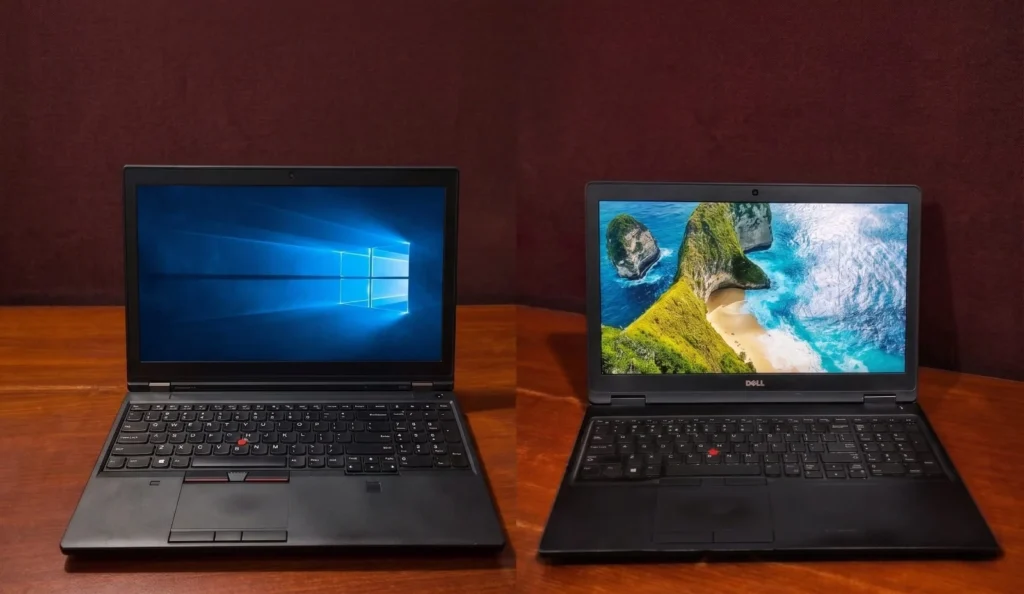
Specs comparison
Feature | ||
|---|---|---|
Processor (CPU) | Intel Core i7-6820HQ (6th Gen) 4 Cores / 8 Threads (2.7 GHz to 3.6 GHz) | Intel Core i7-7700HQ (7th Gen) 4 Cores / 8 Threads (2.8 GHz to 3.8 GHz) |
Graphics (GPU) | NVIDIA Quadro M2000M (4GB GDDR5 VRAM) | NVIDIA Quadro M620 (2GB GDDR5 VRAM) |
Memory (RAM) | 16GB DDR4 (4 slots, up to 64GB) | 16GB DDR4 (2400MHz) (up to 32GB) |
Display | 15.6″ FHD (1920×1080) IPS Anti-glare | 15.6″ FHD (1920×1080) IPS |
Weight | 2.8 kg | 2.2 kg |
Battery life (Refurbished) | 3 to 4 hours | 2 to 3 hours |
Ports | Mini DisplayPort, HDMI | VGA, HDMI |
If you are on the hunt for a laptop, you have probably noticed that modern machines are getting thinner, lighter, and sometimes a bit more fragile. What if you don’t want a delicate Ultrabook or you are in need of a machine that can handle heavy tasks with faster loading speed, render 3D models without breaking a sweat, and can easily survive any program you throw at it.
That’s when you need a workstation in your life. Today, we are pitting two of the most popular heavy-duty desktop replacements against each other: the Lenovo ThinkPad P50 and the Dell Precision 3520. Let’s break down which one of these laptops deserves a spot on your desk.
Design and Build Quality
First things first: neither of these laptops is going to win a beauty contest for sleekness, but that is exactly the point.
Lenovo ThinkPad P50: This laptop proudly maintains the clunky, classic, aesthetic and is genuinely built like a tank. It boasts a MIL-STD-810G rating, meaning it can survive rigorous drops, dust, and extreme environments. The chassis is incredibly rigid, crafted from a high-quality plastic lid and a magnesium/aluminum base. However, this ruggedness comes at a cost; the P50 weighs around 2.8kg. It is not designed to discreetly fit into a small bag, but rather to be treated as a reliable stationary desktop.
Dell Precision 3520: The Dell gets a rectangular black box look, prioritizing practicality over style. The chassis and palm rests are wrapped in a soft-touch matte black plastic. While it is not a portable device by any means, it weighs in at about 2.2kg (depending on configuration) and sits comfortably in the middle of the pack for 15-inch workstations. It has a metallic profile for rugged reliability and excellent cooling space.
- Lenovo ThinkPad P50 Rating: 9/10
- Dell Precision 3520 Rating: 8/10
Display
Both laptops offer a 15.6-inch Full HD (1920×1080) IPS display, but they cater to slightly different eyes.
The ThinkPad P50 features an anti-glare coating and provides decent color reproduction that is perfectly suitable for most engineering and office tasks. However, the Dell Precision 3520 really steps up its game in the visual department. When you open the Dell’s heavy lid, you are greeted with a vibrant screen hitting 300 nits of brightness with a great contrast ratio as per dell. The Dell precision 3520 is actually a great fit for semi-professional photo editing in Lightroom or working in Premiere Pro.
- Lenovo ThinkPad P50 Rating: 7/10
- Dell Precision 3520 Rating: 9/10
Performance and Upgradability
This is where both the engine roars. The ThinkPad P50 is powered by a 6th-generation Intel Core i7-6820HQ processor, paired with an NVIDIA Quadro M2000M graphics card equipped with 4GB of dedicated video memory. The Dell, being slightly newer, rocks a 7th-generation Intel Core i7-7700HQ and an NVIDIA Quadro M620 with 2GB of GDDR5 memory
In the storage speeds test, the Lenovo ThinkPad P50 wins by quite a large margin. Its SSD hits blazing fast read speeds of around 3,555 MB/s and write speeds of 3,135 MB/s, making heavy applications load almost instantly. The Dell’s SSD offers good read speeds of 1,933 MB/s, but it writes speeds are noticeably slower, peaking at just 1588 MB/s, which means transferring massive files will take a bit longer than expected.
Both machines are highly upgradeable, which is a dream for power users these days. The Dell gives you direct access to swap out DDR4 Ram up to 32GB. The ThinkPad, however, is a true monster in the battle, offering four RAM slots that support up to 64GB DDR4 Ram of memory and multiple drive bays.
- Lenovo ThinkPad P50 Rating: 9/10
- Dell Precision 3520 Rating: 7.5/10
Keyboard & Touchpad
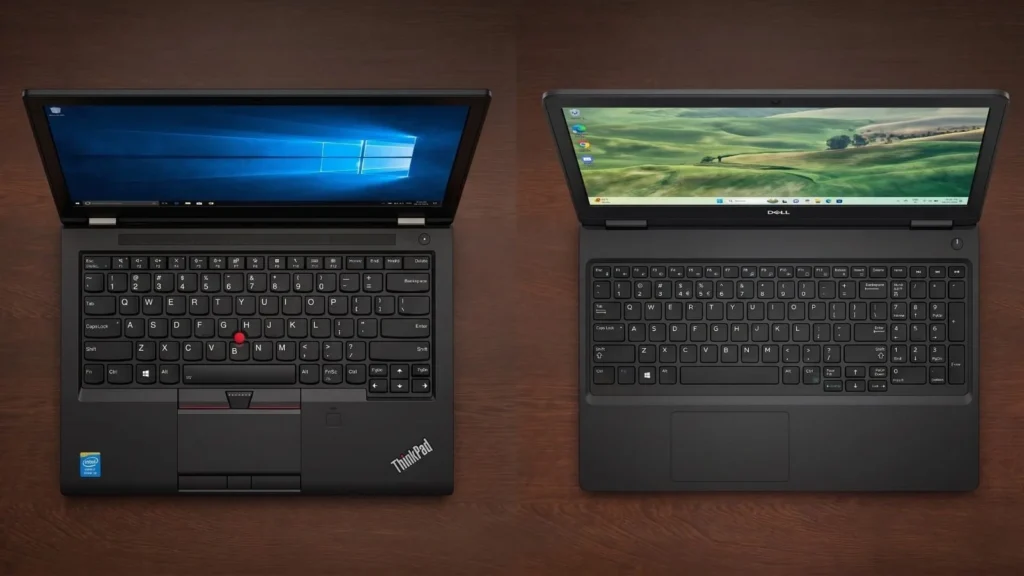
If your work involves typing then you might already know about Lenovo’s reputation. The ThinkPad P50 features an industry-leading keyboard with deep key travel, a satisfying tactile click, and a spill-resistant design. It also includes the highly accurate TrackPoint “nub” for navigating thought. Whereas the Dell Precision 3520’s keyboard and touchpad are slightly pushed to the left, which means you might need a moment to adjust your muscle memory to keep your hands off-center. Once you adapt, the chiclet-style keys offer a very solid typing experience with adequate travel. Both laptops feature full numeric keypads for fast calculation.
Connectivity
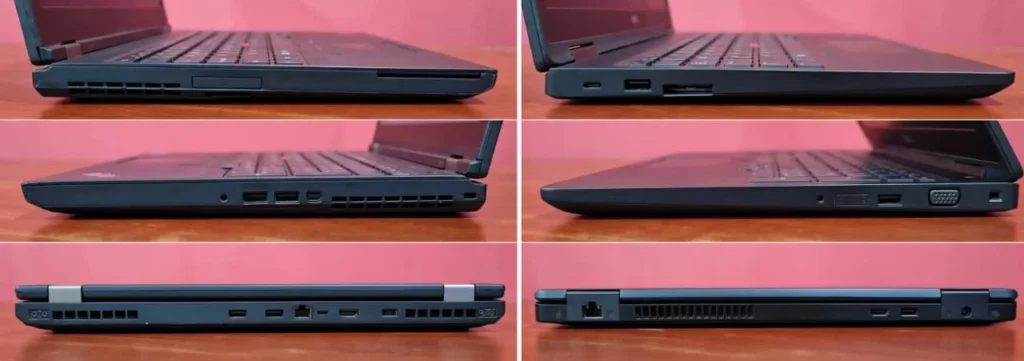
When it comes to connectivity, leave your dongles at home. Both machines are packed with ports. The Dell features Thunderbolt 3, HDMI, VGA, multiple USB 3.0 ports, and even a SIM card tray for LTE connectivity if you are away from Wi-Fi. The Lenovo offers an Express Card slot, a Smartcard reader, Mini DisplayPort, HDMI, and USB Type-C Thunderbolt.
- Lenovo ThinkPad P50 Rating: 9.5/10
- Dell Precision 3520 Rating: 8.5/10
Battery Life
The Dell Precision 3520 is the slightly more portable option, weighing in at around 2.2kg. The ThinkPad P50 is a true stationary desk dweller, weighing a hefty 2.8kg and requiring a massive 170W power brick. As for battery life on these refurbished units, the Lenovo manages about 3 to 4 hours, while the Dell will get you somewhere around 2 to 3 hours, depending heavily on the previous usage and battery degradation.
Final Verdict
Both laptops are really great for professionals who care more about getting their work done without compromises.
If your routine involves creative work like photo editing, or if you want a slightly lighter machine with a more vibrant display, the Dell Precision 3520 is an exceptional and practical choice. However, if you want an indestructible machine with blistering fast storage, insane RAM upgrade potential for multi-tasking or some 3D rendering and modeling, the Lenovo ThinkPad P50 is the ultimate desktop replacement. Both are the best at what they do. Ultimately, it is the customer who needs to get the laptop according to their needs.
Overall Rating:
- Lenovo ThinkPad P50: 8.1/10
- Dell Precision 3520: 8.0/10
Frequently Asked Questions
Q. Which laptop is better in overall performance?
The Lenovo ThinkPad P50, While the Dell has a slightly newer processor, the Lenovo wins with significantly faster storage speeds, double the video memory (4GB), and double the maximum RAM (up to 64GB). The document reflects this by rating the Lenovo 9/10 for performance, compared to the Dell’s 7.5/10
Q: Which laptop is better for creative tasks like photo and video editing?
- The Dell Precision 3520 is a great fit for semi-professional photo editing in Lightroom or working in Premiere Pro. It features a vibrant screen that hits 300 nits of brightness and offers a great contrast ratio.
Q: Which workstation offers better durability for harsh environments?
The Lenovo ThinkPad P50 boasts a MIL-STD-810G rating and is crafted with a rigid chassis. This means it can survive rigorous drops, dust, and extreme environments.
Q: Can I upgrade the memory on these laptops myself?
Yes, both machines are highly upgradeable. The Dell allows you to swap out DDR4 RAM up to 32GB. The Lenovo ThinkPad P50 is even more expansive, offering four RAM slots that support up to 64GB of DDR4 memory
Q: Which laptop is better for 3D modeling and rendering?
The Lenovo ThinkPad P50 is the ultimate desktop replacement for 3D rendering and modeling. It features an NVIDIA Quadro M2000M GPU with 4GB of dedicated video memory and insane RAM upgrade potential.

About Aryamann Saini
Avid tech enthusiast with a focus on strategic problem-solving. Always looking to tackle the next big challenge or learning milestone. Outside of work and studies, I enjoy traveling to historical sites and exploring the open road.
View all posts by Aryamann Saini
