
Blogs
Is an RTX 2050 or GTX 1650 Laptop Enough, or Should You Stretch for a Higher Tier?

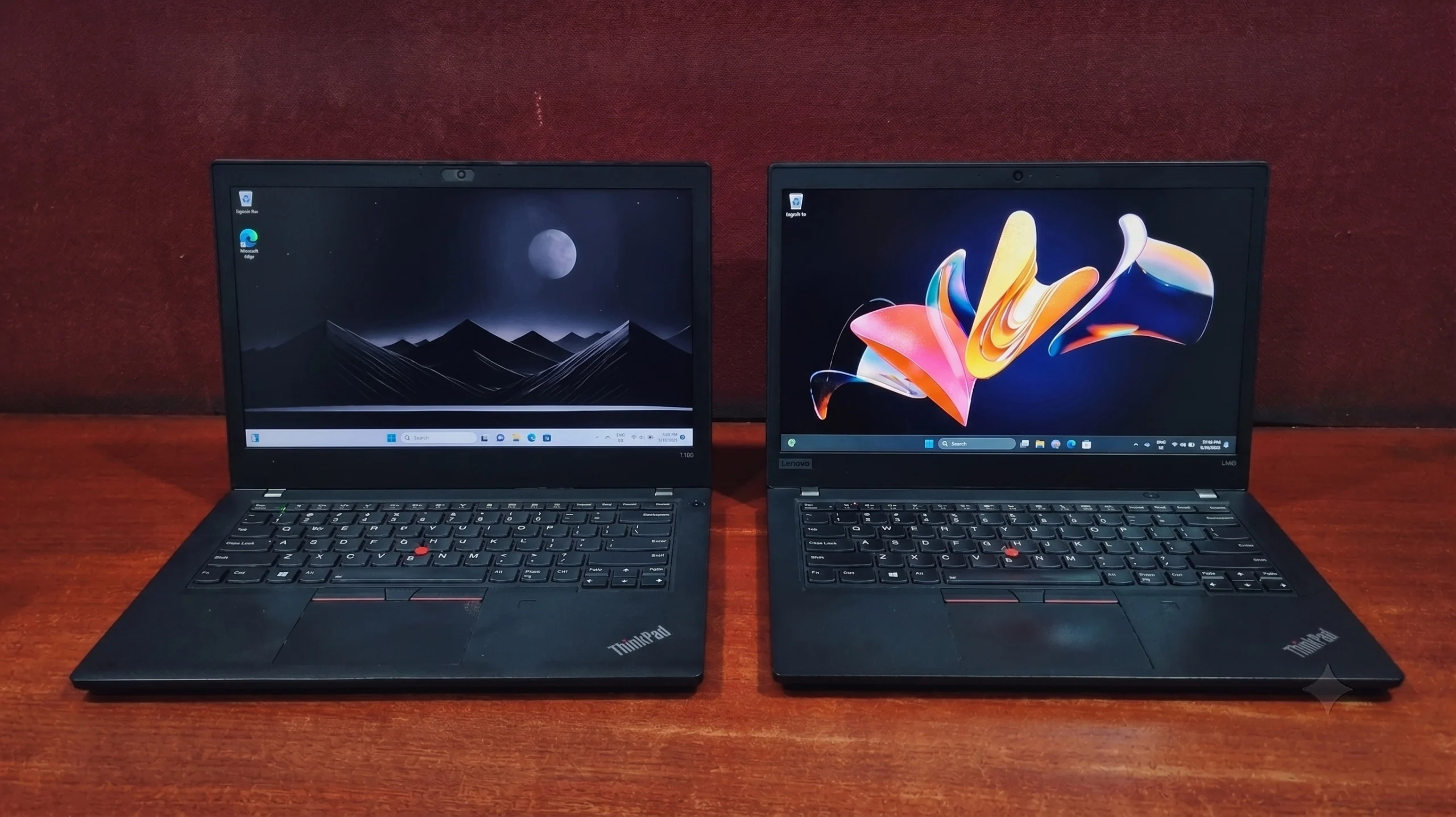
Quick answer: is an RTX 2050 or GTX 1650 laptop enough?
⚡ Quick Answer Tap to read the answer
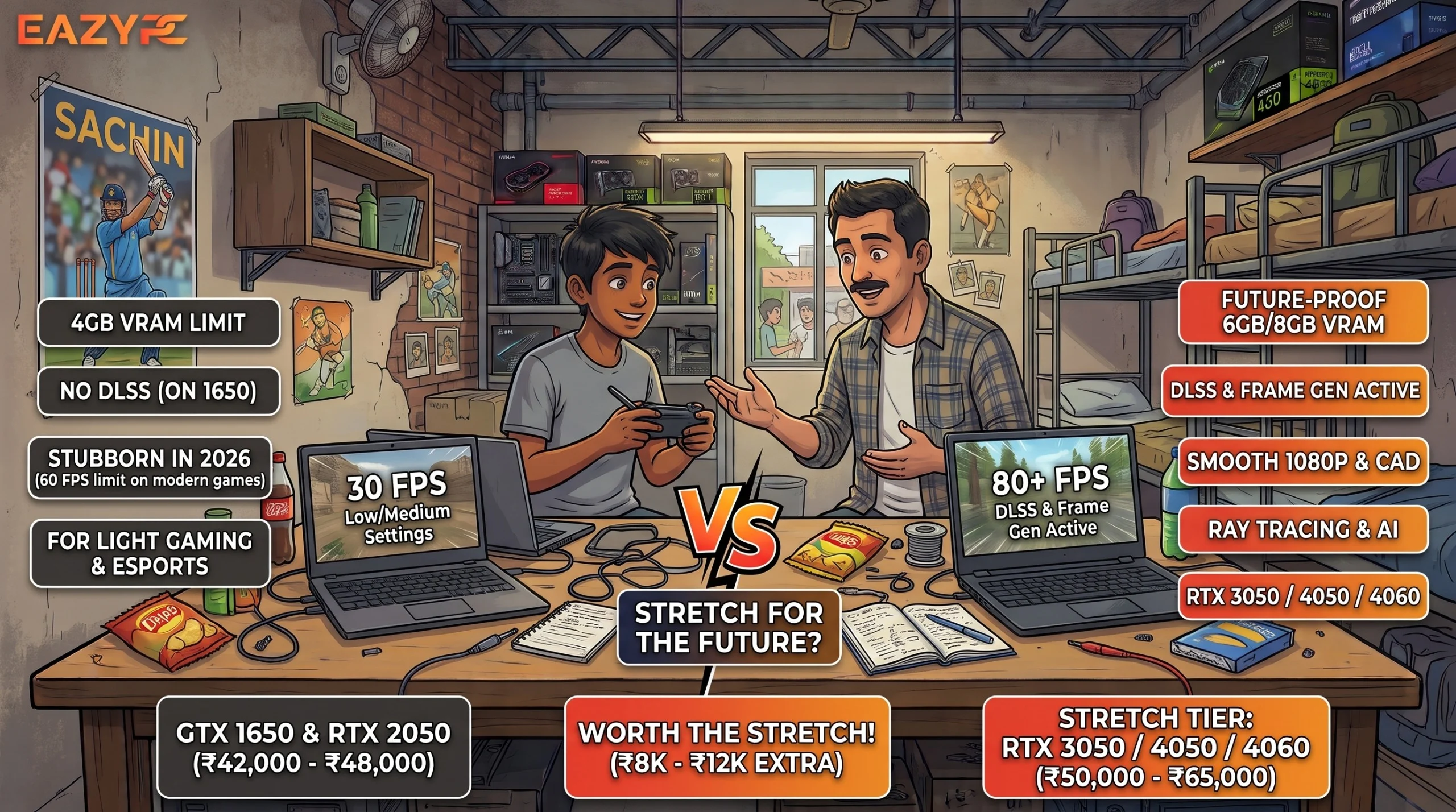
Yes, if you mainly play esports titles or older games, study, code, or do light creative work. No, if you want new AAA games at good settings or a laptop that stays relevant for four years or more. The deciding factor is video memory: the RTX 2050 and GTX 1650 both have 4GB, while the next sensible step, the RTX 5050, has 8GB. If the extra cost is manageable, stretch to an RTX 5050 or RTX 5060. If it isn’t, a 4GB laptop still does a lot.
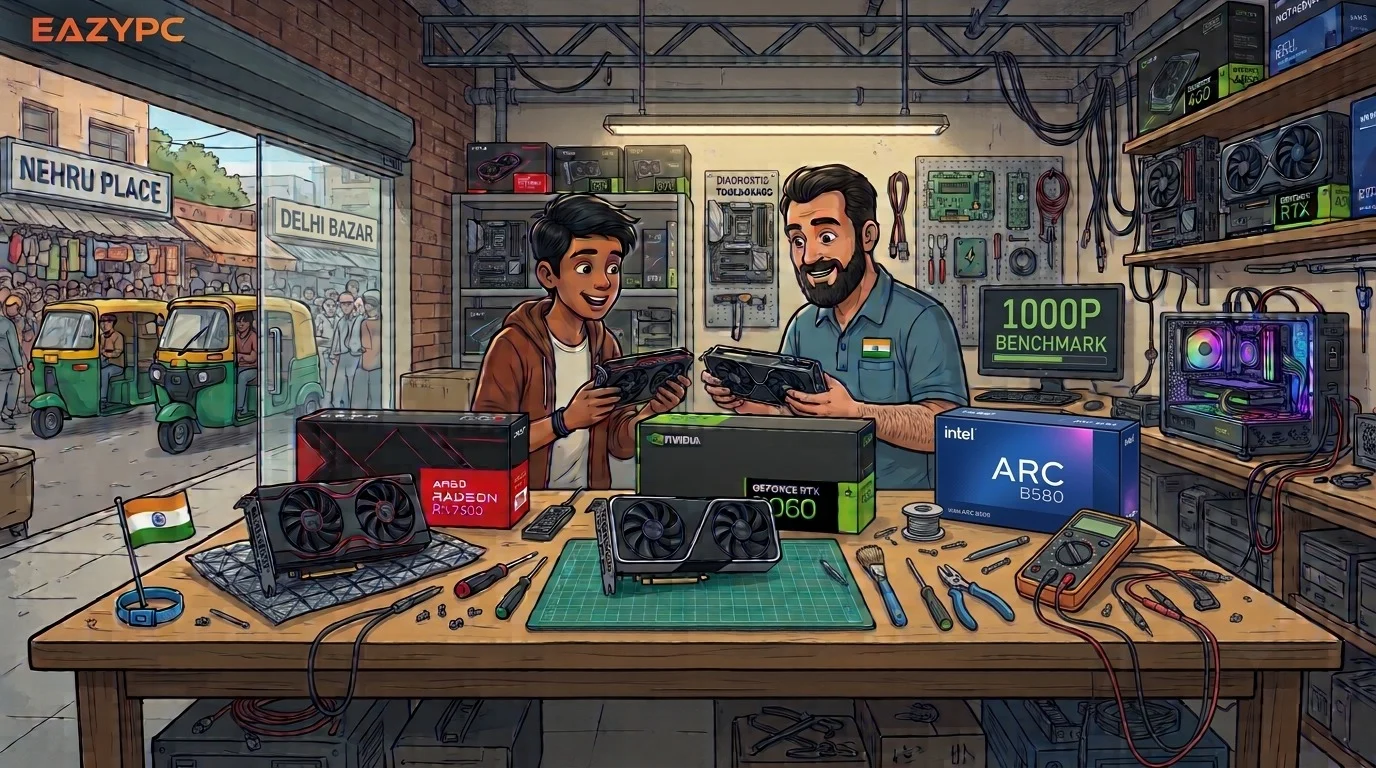
How does RTX 2050, GTX 1650, RTX 5050 and RTX 5060 compare?
| Laptop GPU | Architecture | VRAM | Typical power (TGP) | DLSS and ray tracing | Best for |
|---|---|---|---|---|---|
| RTX 2050 | Ampere (GA107) | 4GB GDDR6, 64-bit bus | About 30W to 45W | Yes | Esports, study, light creative work |
| GTX 1650 | Turing | 4GB | Varies by laptop (approximate) | No | Older and lightweight games |
| RTX 5050 | Blackwell | 8GB GDDR7, 128-bit bus | 35W to 100W | Yes | Modern games at 1080p, 3 to 4 years of use |
| RTX 5060 | Blackwell | 8GB GDDR7 | 45W to 115W | Yes | High-setting 1080p, entry-level 1440p |
The RTX 2050 has 2,048 CUDA cores, the same number as the RTX 3050, but it runs at low power and a narrow memory bus, so it behaves like a smaller, cooler cousin of the 3050. The RTX 5050 has 2,560 CUDA cores and, without frame generation, performs roughly like the older RTX 4060 laptop GPU.
What is the difference between RTX 2050 and GTX 1650?
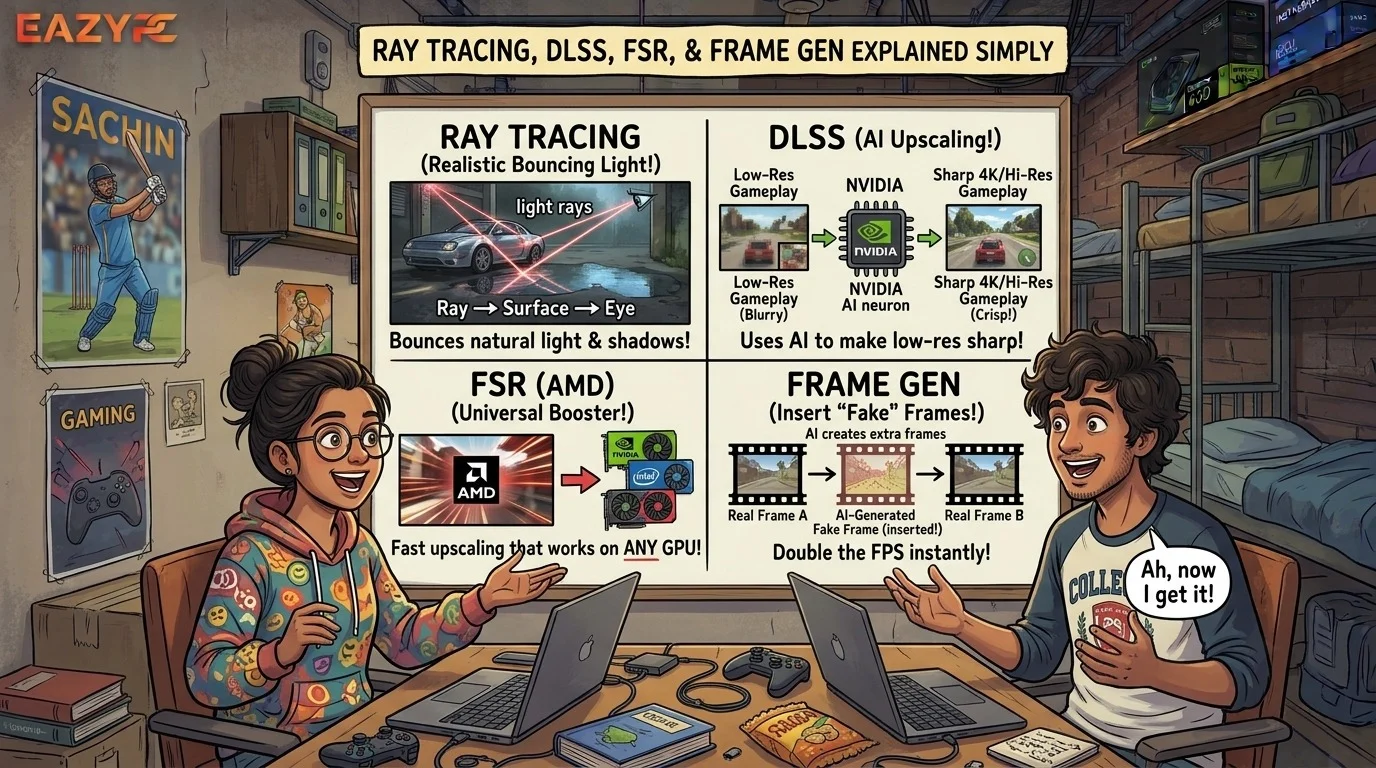
The RTX 2050 is the modern choice. It is built on NVIDIA’s Ampere architecture and supports DLSS upscaling and ray tracing, while the GTX 1650 does not. Both have 4GB of VRAM, so in practice they are in the same broad performance league, with the 2050 getting the edge from DLSS and newer drivers and features.
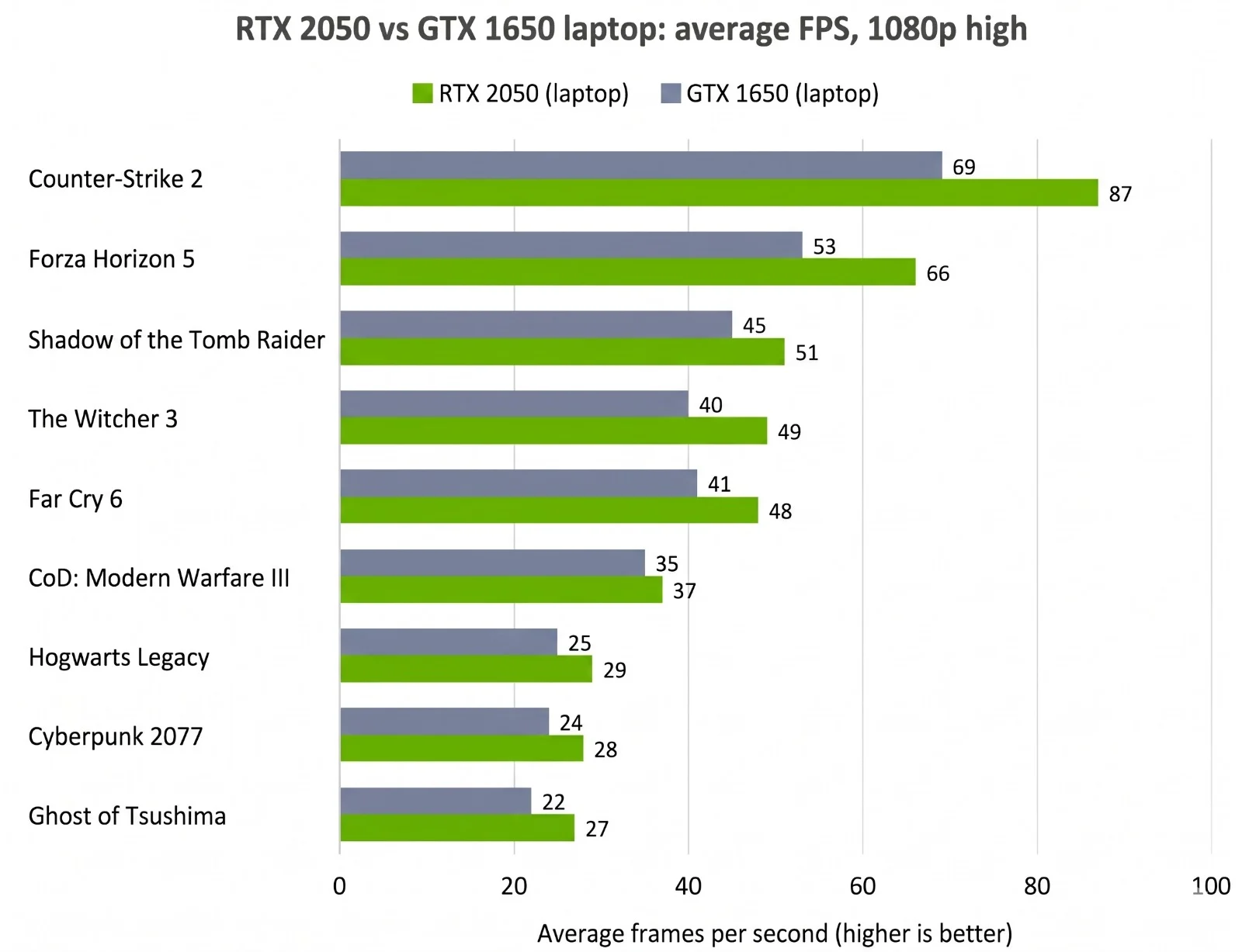
Average frame rates for each GPU in laptop benchmarks at 1080p with high settings. Real-world results vary with each laptop’s power limit (TGP) and cooling.
Is an RTX 2050 laptop enough for gaming in 2026?
Yes, for esports and well-optimized games, no for demanding new releases. Expect smooth 1080p play in titles like Valorant, CS2, GTA V, Minecraft, and tuned Fortnite or Apex settings. Many older AAA games are playable at medium or low settings. Newer releases increasingly want more than 4GB of VRAM, which forces low textures, lower resolution, or heavy upscaling.
Think of the RTX 2050 as an entry-level gaming option rather than a future-proof AAA machine.
An RTX 2050 or GTX 1650 laptop is also perfectly capable for:
- College work, coding, Office, browsing, and streaming
- Photo editing and casual 1080p video editing
- Design tools like Canva or Figma
When does a 4GB laptop GPU stop being enough?
A 4GB GPU starts to struggle in these situations:
- New AAA games: high-resolution textures can exceed 4GB, so you drop settings sooner than the GPU’s raw speed would suggest.
- Long-term use: a laptop bought now should ideally last three to four years, and 4GB may feel dated well before that.
- Heavier creative or AI work: 4K video editing, 3D rendering, and local AI tools benefit strongly from more VRAM.
- High refresh rates: pushing 144Hz in modern games is unrealistic on this class of GPU.
Is the RTX 5050 worth the extra money?
Usually yes, if the price gap is modest. The RTX 5050 laptop GPU launched in mid-2025 with 8GB of GDDR7 memory on a 128-bit bus. It runs roughly 10% to 20% ahead of the RTX 4050, and it lands near the older RTX 4060 laptop GPU without frame generation. The bigger practical win over 2050 is doubling VRAM from 4GB to 8GB.
The RTX 5060 is the next step. It is the entry point for comfortable 1440p gaming. The RTX 5070 makes more sense for people who plan to keep a laptop for years.
Why are gaming laptops more expensive in 2026?
An AI-driven memory shortage has raised the cost of RAM, SSDs, and graphics memory. Gaming laptops are running about 20% to 35% above 2025 prices. In India, Lenovo’s refreshed Legion and LOQ models launched roughly 50% or more above comparable 2025 models, and genuine RTX 5060 laptops start from about ₹1,25,990, with some above ₹2,00,000.
What that means for you:
- The gap between a budget laptop and the next tier is wider than it used to be, so “stretching” may mean a big jump in rupees.
- Retail prices lag component prices, so older stock and previous-generation models can be real bargains.
- Waiting is not guaranteed to make things cheaper.
How should you decide: stay with RTX 2050 or stretch?
Choose an RTX 2050 or GTX 1650 laptop if:
- You mostly play esports or older games
- Your main use is study, coding, office work, or light creative work
- The next tier would strain your budget
- You see it as a two-to-three-year machine
Stretch to an RTX 5050 if:
- You want new AAA games without constant compromises
- You do video editing, 3D work, or AI experiments where 8GB of VRAM matters
- You want the laptop to stay relevant for four years or more
- The extra cost is comfortable, not a loan you will regret
Go to an RTX 5060 or RTX 5070 if:
- You want smooth 1440p gaming or an external high-resolution monitor
- You are a serious creator or a student in engineering, game design, or AI
- You would rather buy once and not think about upgrading for a long time
What should you check before buying a gaming laptop?
- Wattage (TGP), not just the model’s name. The same GPU name can run at very different power levels. The RTX 5060 laptop chip can run anywhere from 45W to 115W, which can change real-world performance by around 30%.
- Confusing names. Some listings in “RTX 5060” searches are actually RTX 4050 or RTX 5050 laptops, and the RTX 3050 exists in several variants (4GB, 6GB, and an “A” version).
- VRAM. In 2026, 8GB is the comfortable floor for a gaming laptop you want to keep. 4GB works but is the limiting factor.
- RAM, storage, and cooling. Aim for at least 16GB of RAM, a 512GB to 1TB SSD, and a cooling system that prevents throttling. Memory is pricier this year, so an upgradeable RAM slot can save money later.
- Display quality. A dim, washed-out screen ruins a good GPU. Do not pay extra for a refresh rate your GPU cannot reach.
- DLSS and settings. On an RTX 2050, DLSS and lowered texture and shadow settings can turn a choppy game into a smooth one.
- Used or previous-generation options. With new prices inflated, a well-kept RTX 4050 or 4060 laptop can beat a new 2050 on value. Buy with returns or warranty.
- Cloud gaming as a supplement. NVIDIA’s GeForce Now has arrived in India and can cover the occasional heavy title, though it needs a stable connection.
Frequently asked questions
Yes, generally. The RTX 2050 uses the newer Ampere architecture and supports DLSS and ray tracing, while the GTX 1650 does not. Both have 4GB VRAM, so the gap is modest.
Some, at low to medium settings with DLSS. Esports and well-optimized games run well. Demanding new AAA releases are limited to 4GB VRAM.
For esports, older games, study, and light creative work, yes. For new AAA games or heavier creative and AI work, 8GB is the more comfortable minimum.
It is a meaningful step up mainly because of 8GB of faster GDDR7 memory on a wider bus. Without frame generation it performs roughly like the older RTX 4060 laptop GPU, and it is around 10% to 20% faster than the RTX 4050.
Buy the 2050 if your budget is tight and your use is light. Save for an RTX 5050 or 5060 if you want modern games at good settings or a laptop that lasts four years or more.
The bottom line
The Bottom Line
An RTX 2050 or GTX 1650 laptop is enough for students, esports players, and casual gamers who want an affordable, capable machine. It is not a smart long-term bet for new AAA games or heavier creative work. The first upgrade that feels genuinely meaningful is the RTX 5050 with 8GB of VRAM, and the RTX 5060 buys peace of mind if you can afford it. Buy for the games and work you actually do, with a little room to grow.